Let the routine work run itself. Keep people informed.
Automated workflows that move orders, documents, notifications and data between the tools you already use, with every step logged and every exception sent to a person.
One online order, before and after
- 01Copy the order from the store into a spreadsheetAutomated
- 02Check the item is in stockAutomated
- 03Book the courier on their websiteAutomated
- 04Email the customer a tracking linkAutomated
- 05Decide what to do when an item has run outYour team
- 06Update the stock sheet and the weekly reportAutomated
The challenge
Routine work grows with the business.
- 01Every order is retyped from the store into a spreadsheet and the courier's website.
- 02Approvals sit in someone's inbox until a customer chases.
- 03The weekly report takes a person most of Monday.
How we build it
Automation you can trust with real work.
- Mapped first
- We follow the work as it happens today and agree which steps have a rule and which need judgement.
- Logged every time
- Each run records what triggered it, what it did and what it changed, so nobody has to wonder.
- Safe to run twice
- Duplicate events and retries are expected, so nothing is booked, charged or emailed twice.
- Exceptions go to a person
- When a rule can't decide, the case lands in a queue with everything needed to resolve it.
What we design and build
Typical systems
- Order processing pipelines
- Approval workflows
- CRM and accounting sync
- Reporting and alerting jobs
Triggers, platforms and safeguards
Triggers
- Webhooks
- Schedules
- Mailbox and form intake
Platforms
- Shopify
- Microsoft 365
- Accounting and CRM APIs
- Courier APIs
Reliability
- Queues
- Idempotency keys
- Exception queues
Visibility
- Audit logs
- Alerts
- Run history
Related case study
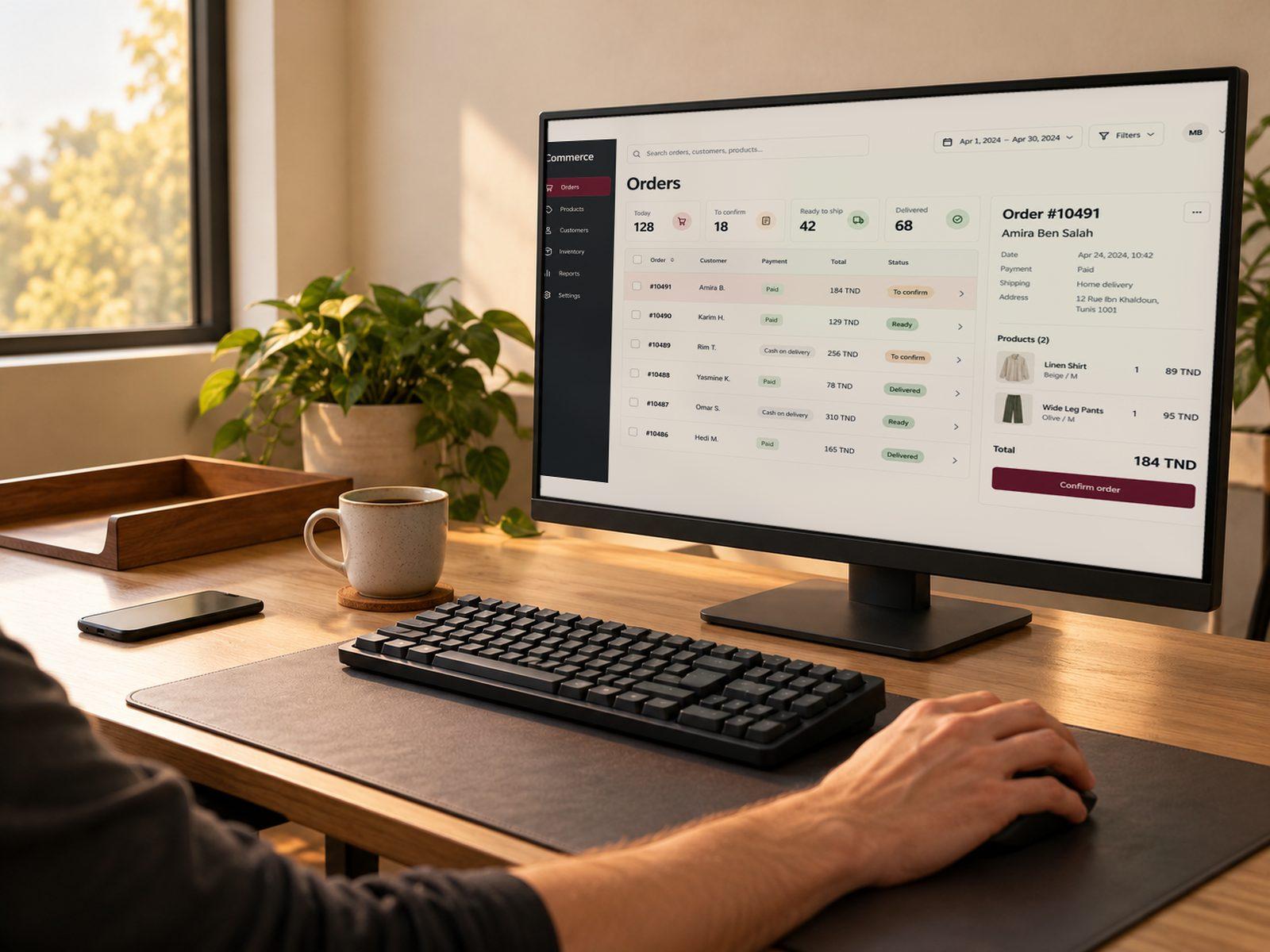
Commerce Operations Platform
From the Shopify checkout to the courier, one traceable lifecycle.
Order confirmation, stock reservation, packing checks and courier handover automated around one Shopify store, with exceptions routed to the team.
Read the case studyQuestions
Frequently asked questions
- We design and build order, invoice and document workflows; approval and notification flows; data synchronisation between business tools; and scheduled reports and alerts.
- It fits situations such as: every order is retyped from the store into a spreadsheet and the courier's website; approvals sit in someone's inbox until a customer chases.
- Tools are chosen per project, keeping to the smallest set your team can run. Typical choices include webhooks, schedules, mailbox and form intake, Shopify, Microsoft 365 and accounting and CRM APIs.
- Automations written as code you own: tested, versioned, observable and safe to run twice.
- Send an inquiry through the contact page: an engineer reads it and replies by email with questions or a time to talk. If working together makes sense, you receive a written scope and estimate, and delivery runs in stages: Discover, Define, Build, then Ship & scale.
Other services
- Websites
Distinctive, fast websites that turn visitors into enquiries.
- E-commerce
Storefronts that sell, connected to the work behind them.
- Web apps
From first version to a product people rely on.
- Mobile apps
iOS and Android apps from one codebase.
Bring us the process everyone works around.
The spreadsheet that runs the business, the inbox nobody can leave, the integration that breaks quietly. Tell us where operations slow down and we will show you how we would engineer it.
What happens next
- 01A conversation with the engineers who would build it.
- 02A short written view of the problem and how we would approach it.
- 03A scoped proposal, if working together makes sense.